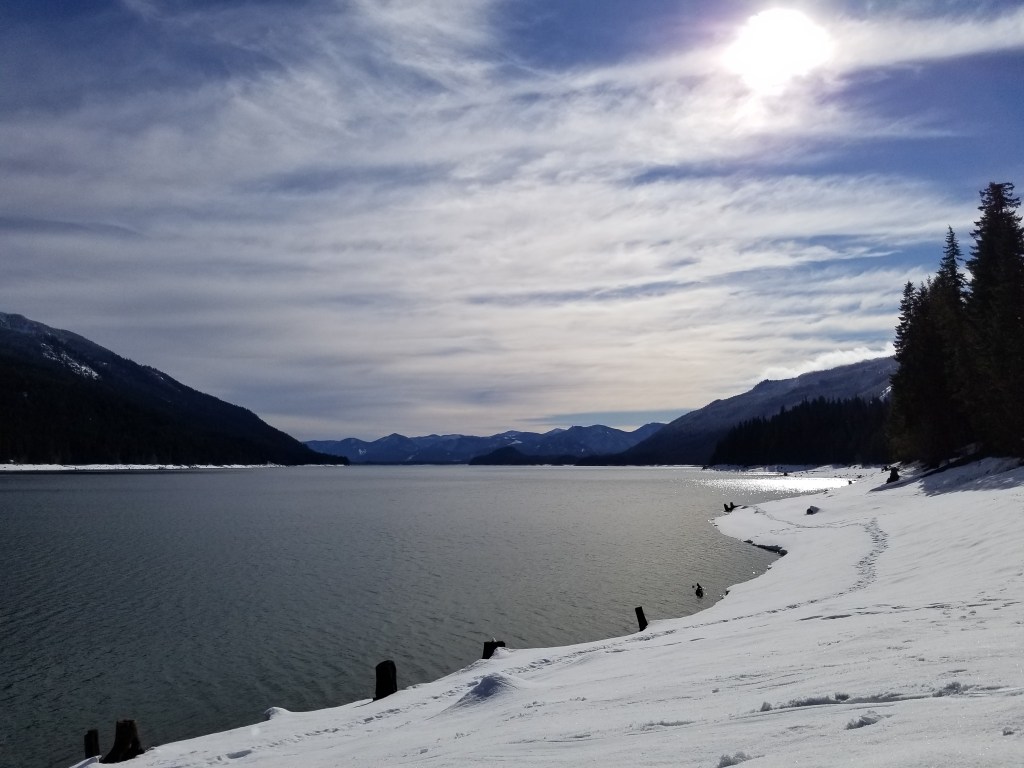
Lake Kachess is one of my favorite beginner-friendly winter snowshoes in Washington — and one of the most overlooked.
This route is almost entirely flat, easy to follow, and incredibly peaceful, making it ideal if you want a true winter experience without committing to steep terrain, avalanche risk, or technical navigation.
If you’re looking for a low-stress, high-reward snowshoe on a sunny winter day, this one punches well above its weight.
Why Lake Kachess Works So Well in Winter
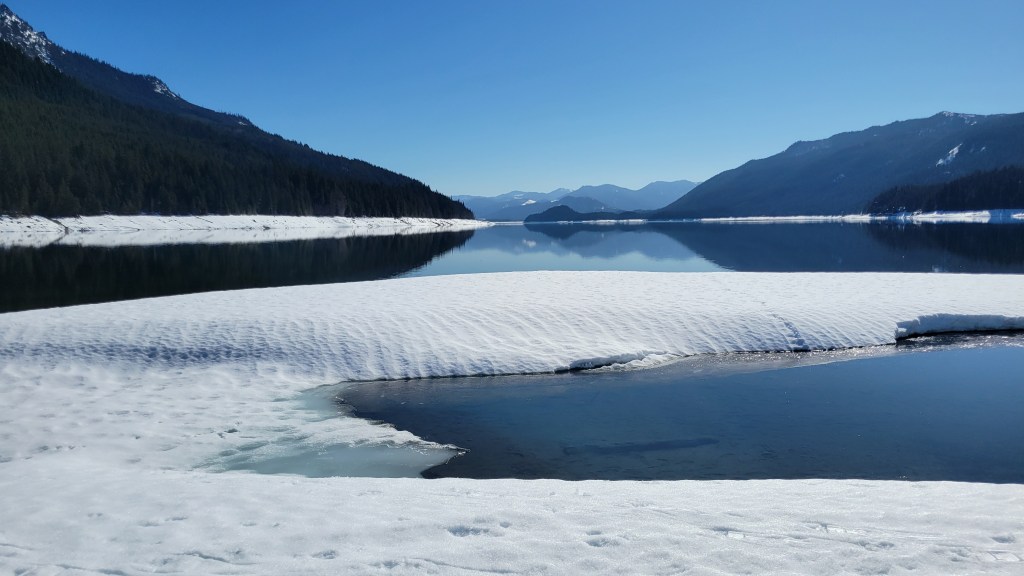
This is a snowshoe I recommend specifically for February and March, and ideally on a bluebird day.
A few reasons why timing matters here:
- Lake Kachess sits at a lower elevation than Snoqualmie Pass, so it often doesn’t have reliable snow early in the winter.
- By late winter, snow coverage is usually solid, roads are packed in, and conditions are far more predictable.
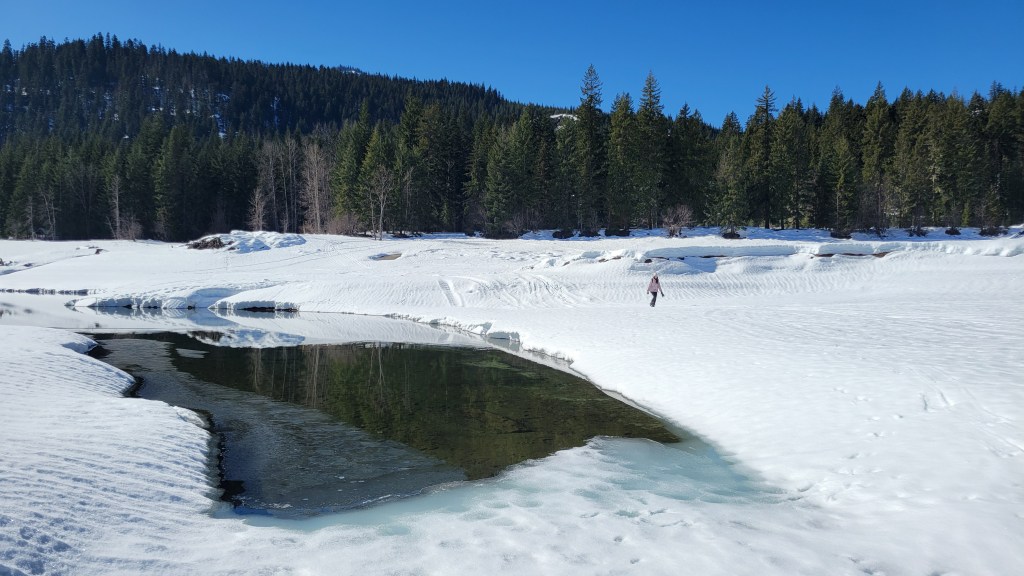
- On clear days, the combination of snow-covered shoreline + open water is striking and surprisingly rare.
The lake is large enough that it’s often not fully frozen, even in winter. That contrast — snow on the ground, water still moving — is the magic.
Permits & Parking (Important)
You will need a Sno-Park permit to park near the trailhead in winter.
- Day passes or season passes are available
- I recommend purchasing one ahead of time (REI makes this easy)
- This area is popular with snowmobilers, but that doesn’t detract from the experience
By late winter, most snowmobilers are out for long full-day rides and quickly branch off. You’ll only share the route briefly.
Route Overview (High-Level)
This snowshoe follows a snowed-over forest road, which keeps things simple and beginner-friendly.
A few notes on the experience:
- The road walk itself is peaceful, quiet, and forested
- Lake views are limited until you reach the campground area
- There is a nice viewpoint partway in, but the real payoff comes at the lake
Once you reach the camping area, you turn right and access the lakeshore, which is the natural turnaround point.
That’s where you want to stop, sit down, and take your time.
Lakeshore Experience (The Payoff)
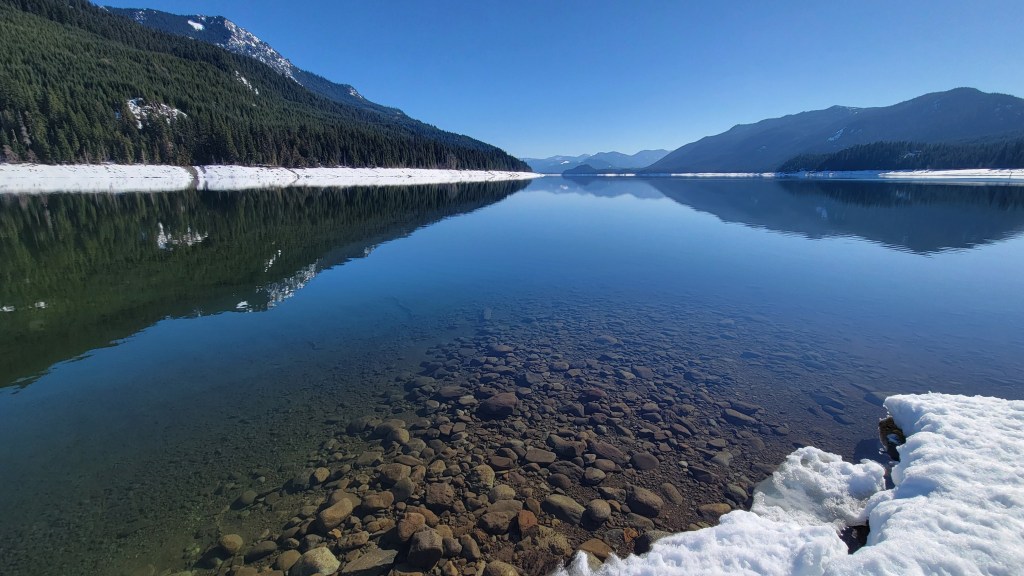
The lakeshore is the highlight:
- Wide-open views
- Snow-covered ground
- Open water along the edge
- Almost no people on most winter days
It’s an ideal place for:
- A long snack break
- Lunch in the sun
- Quiet reflection
- Photos without crowds
One important note:
There is an alternative route along the shoreline, but parts of that land are private property. It’s best to:
- Stay on the forest road until the camp area
- Enjoy the lakeshore there
- Turn around the way you came
Snowshoes vs. Traction vs. Skis
- Snowshoes: recommended once snow coverage is solid, especially near the lakeshore
- Boots only: likely to result in post-holing
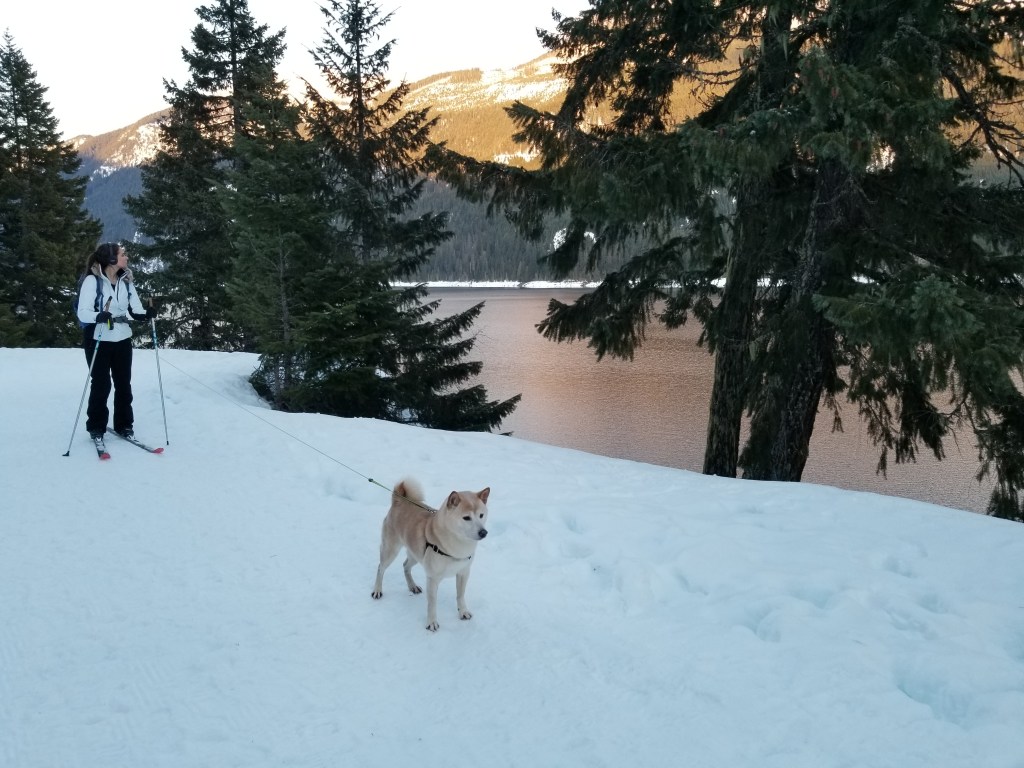
- Backcountry cross-country skiing: also an excellent option here
Because the route is almost entirely flat, this is a beginner-friendly XC ski outing as well — just avoid skiing the shoreline loop itself.
A Quick Note on Winter Safety
Lake Kachess is very beginner-friendly and does not involve avalanche terrain, steep slopes, or complex route finding. That said, winter travel always deserves a baseline level of awareness.
A few simple precautions go a long way here:
- Be mindful near trail edges, lake shores, and any areas where snow may be thinner or unsupported
- Avoid stepping onto overhanging snow near water or embankments
- If snow conditions are soft, stick to packed tracks where possible
- Snowshoes help distribute weight and reduce post-holing, especially near the lakeshore
Nothing advanced is required for this route — just common sense and basic winter awareness. Even for flat, low-risk snowshoes like this one, it’s still smart to read a short primer on basic snowshoeing safety before heading out.
Sharing the Trail with Snowmobiles
This route briefly overlaps with snowmobile access, though it’s rarely an issue in practice.
If you hear a snowmobile:
- You’ll usually hear it well before you see it
- Step out of the center of the trail and move to the side
- I recommend standing still, making yourself clearly visible, and letting the snowmobile pass
The trail here is a wide snowed-over forest road, so there’s plenty of room for everyone. With basic awareness and courtesy, sharing this route is straightforward and stress-free.
Other Seasons (Quick Notes)
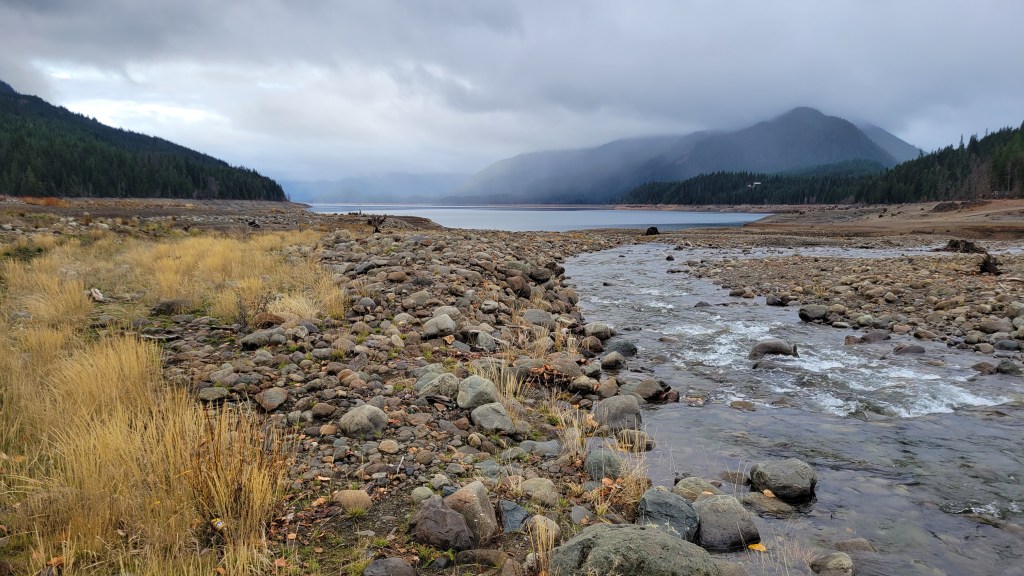
- Fall: surprisingly beautiful and very quiet; you may be able to park much closer to the campsite before reaching the point where the road is closed
- Summer: popular as a camping destination; not the same sleeper experience
- Shoulder seasons: access can vary depending on road closures
Winter is where this place really shines.
Why This Is a Sleeper Pick
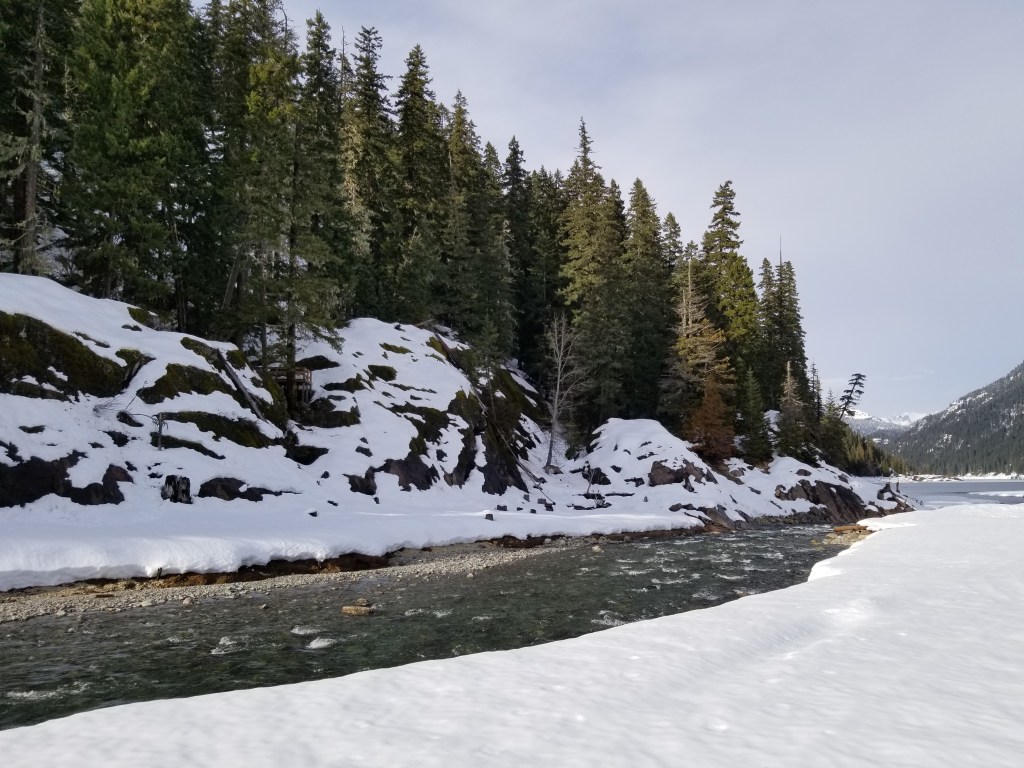
Lake Kachess flies under the radar because:
- It’s on the east side of Snoqualmie Pass
- It doesn’t look dramatic on a map
- It’s associated more with camping and snowmobiling than hiking
In reality, it’s one of the calmest, easiest ways to experience winter solitude within about 80 minutes of Seattle.
I also include Lake Kachess in my Sleeper Hikes pillar as a great example of how timing and conditions matter more than hype.
Quick Facts
- Best season: second half of winter (Late January–March)
- Difficulty: Beginner snowshoe
- Elevation: ~2,200 ft (approx.)
- Elevation gain: Minimal
- Permit: Sno-Park permit required in winter
- Bonus: Great for beginner backcountry XC skiing
 Dangenda