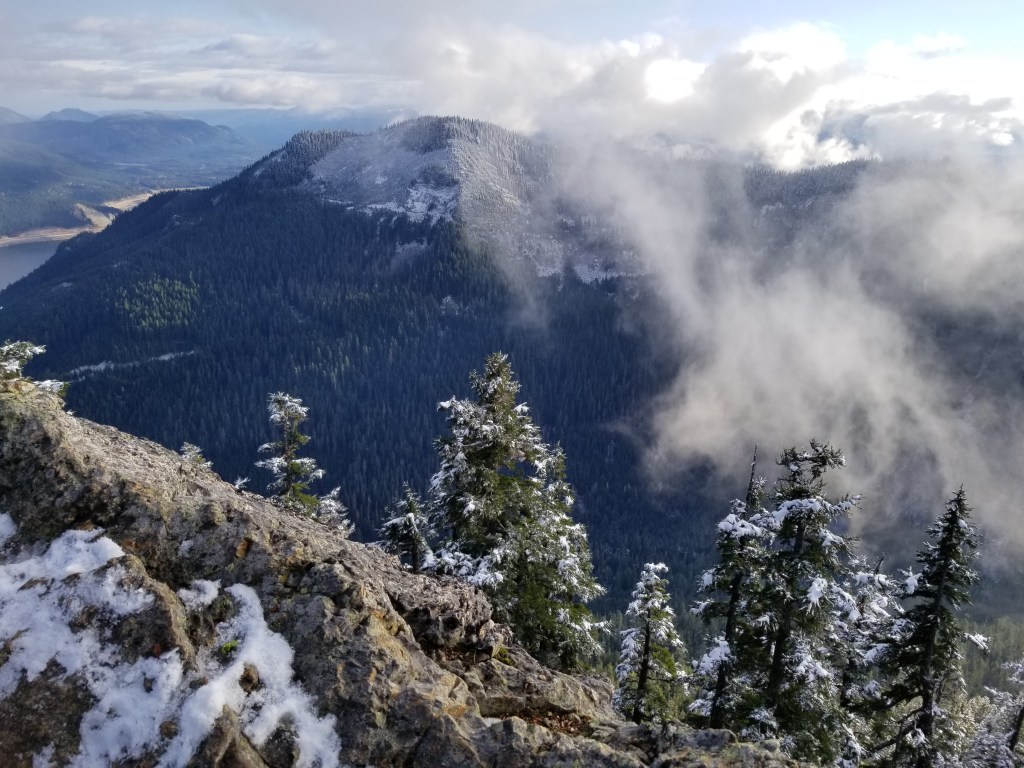
By “shoulder season,” I’m referring to spring and late fall — the in-between seasons where conditions are shifting, access is changing, and timing matters more than mileage.
At low elevations, especially near the city, many hikes are doable year-round. What changes is mostly cosmetic: weather, foliage, flowers, or leaves on trees.
As you move up in elevation, that’s where the real nuance begins. Snow, snowed-over roads, closures, and rapidly changing conditions turn hiking into more of a decision-making exercise than a checklist.
This article is about the art of timing shoulder season hikes — hitting that narrow window when roads are still drivable, trails are quiet, and the landscape is in transition.
Shoulder Season Is About Elevation, Not the Calendar
In the Central Cascades, the first snowfall of fall typically arrives toward the end of October at higher elevations. In some areas, snow can linger on trails — and roads — well into July.
At the highest elevations, snow is a constant. Mount Rainier’s summit, for example, is snow-covered year-round.
Roads usually close before trails become truly unusable. Entire corridors — like the North Cascades Highway — shut down for the winter, cutting off access regardless of trail conditions.
That’s why shoulder season hiking isn’t about the date on the calendar. It’s about:
- snow line
- road access
- elevation
- and timing the transition just right
Fall Shoulder Season: The Early Snow Window (Late October–Early December)
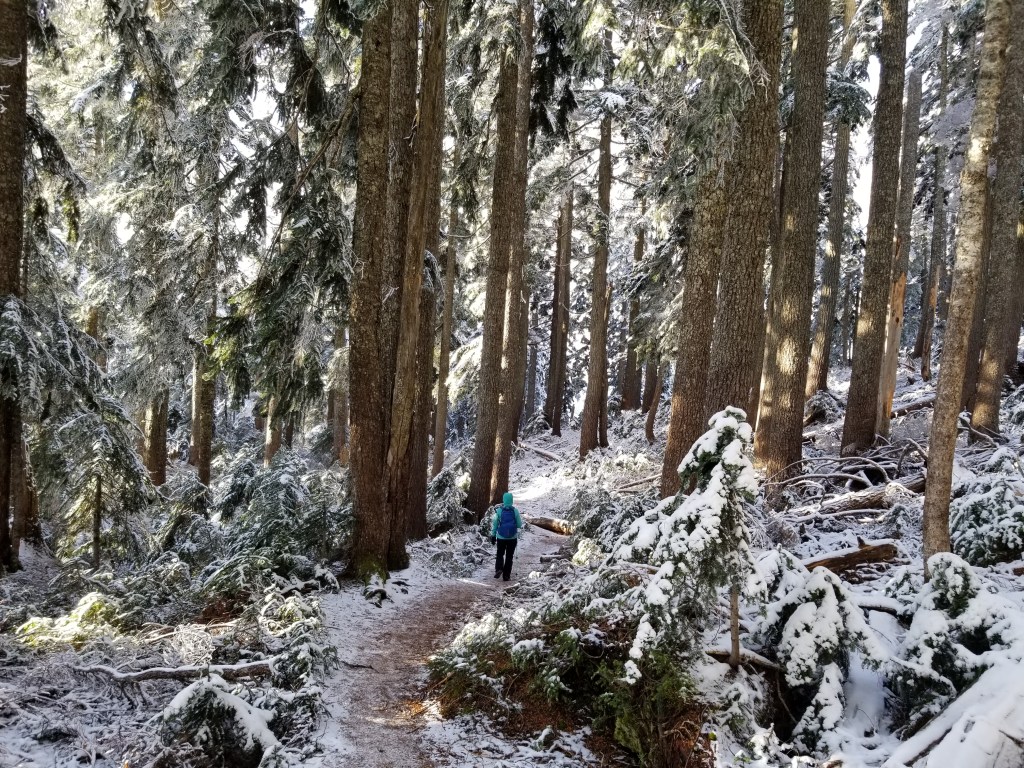
Some of the best shoulder season hiking of the entire year happens after the first snowfall, but before roads fully close.
During this window:
- trails empty out quickly
- snow adds contrast and texture
- conditions still feel hikeable (often with spikes)
Great Fall Shoulder Season Hikes
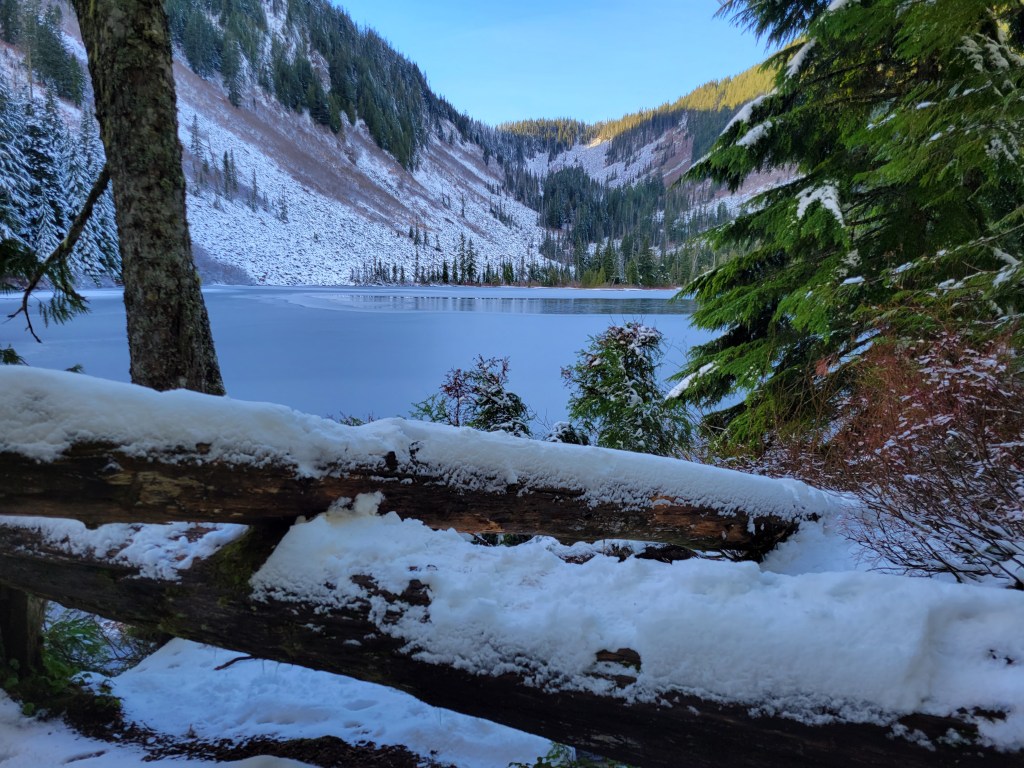
These shine when there’s some snow, but not full winter conditions:
- Mount Catherine
- Snow Lake (see my experience brief for seasonal nuance)
- Mirror Lake
- Ira Spring Trail
- Talapus & Ollalie Lakes
Mirror Lake (Timing Matters)
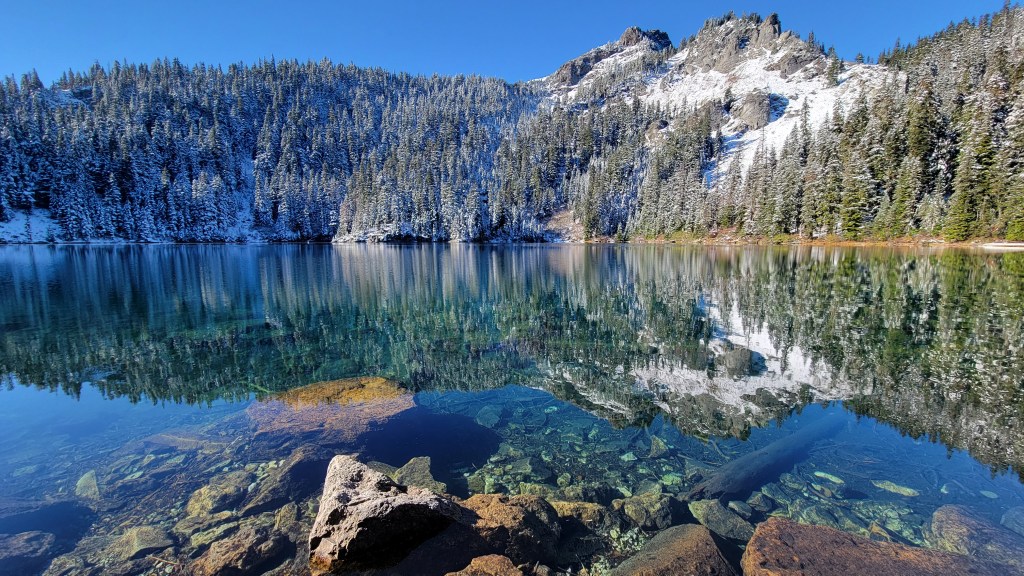
Mirror Lake is at its most scenic, in my opinion, right between fall and winter:
- when there’s a dusting of snow
- but the lake is not yet frozen over
If you miss that window:
- a frozen lake loses its reflective character
- a fully snowed-over basin stops feeling like a lake at all
The timing can be very narrow, and conditions vary year-to-year. Trail reports are your best real-time signal.
When Fall Shoulder Season Ends
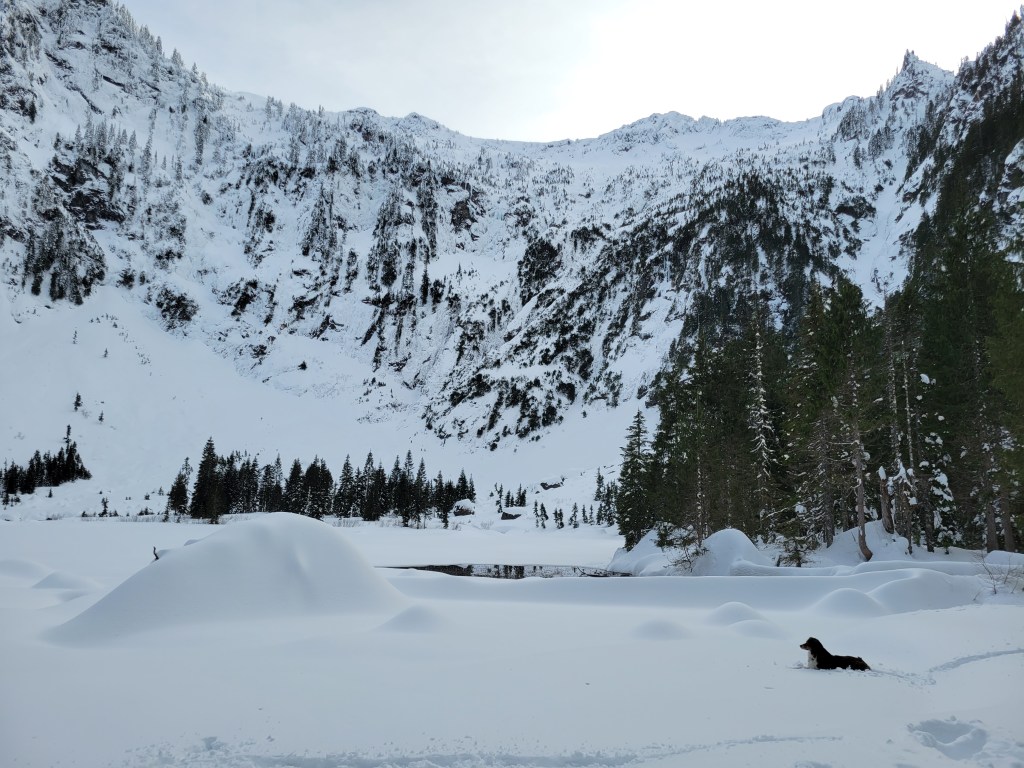
By early December, many of these hikes become inaccessible:
- roads snow over
- parking areas get tricky
- traction becomes mandatory
By late December, you’re usually in full winter mode.
This is why November is such a sweet spot — and why you can’t sleep on it.
Spring Shoulder Season: Two Very Different Phases
Spring shoulder season evolves in stages.
Early Spring: Snowshoe & Snow Hiking Season (Late March–Early April)
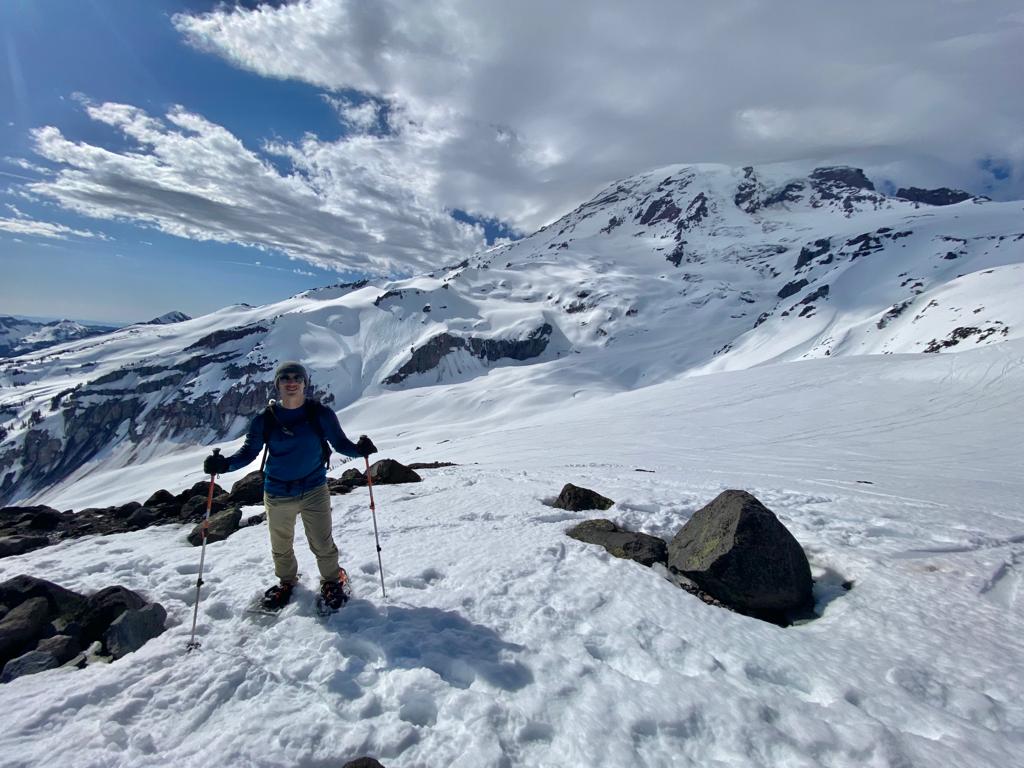
This is one of my favorite times of year.
Benefits:
- consolidated snow
- longer daylight after daylight savings
- higher odds of bluebird days
- fewer crowds as ski season winds down
Great options:
- Mount Baker – Artist Point (see my experience brief)
- Mount Rainier – Paradise area
- Lake Valhalla
- Kendall Lakes
Early spring often beats mid-winter conditions for both weather and visibility.
Mid to Late “Spring”: Lower Elevations & Thaw Windows (May–Early July)
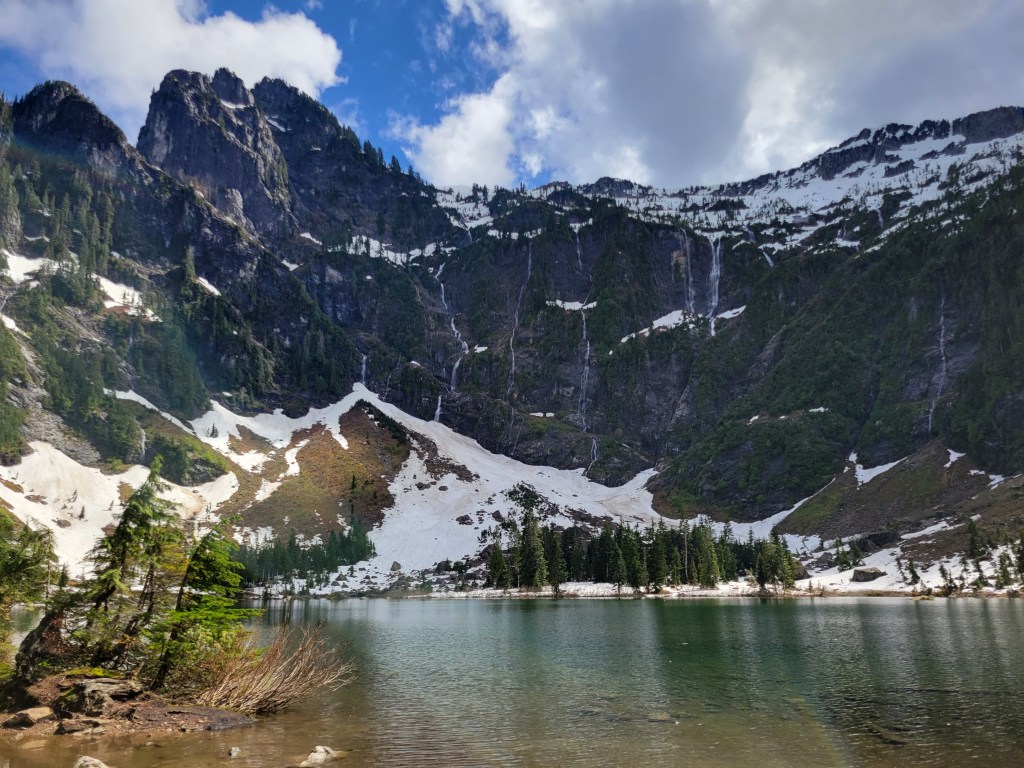
As snow melts:
- higher elevations turn muddy
- snow becomes dirty and uneven
- conditions are less visually appealing
This is when I:
- stick to lower elevations
- accept a little mud
- enjoy fewer crowds
Examples:
- Heather Lake
- Snow Lake
Late spring shoulder season isn’t as pretty as late fall — melting snow just isn’t as photogenic as fresh snow — but the solitude can make up for it.
Do’s and Don’ts of Shoulder Season Hiking
Do:
- Prioritize road access over ambition
- Check recent trail reports before committing
- Be flexible and ready to pivot
Don’t:
- Push for the highest elevations starting mid-October
- Assume a road that was open last week still is
- Ignore parking lot conditions — they’re often worse than the road itself
A Note on Driving, Access, and Being Conservative
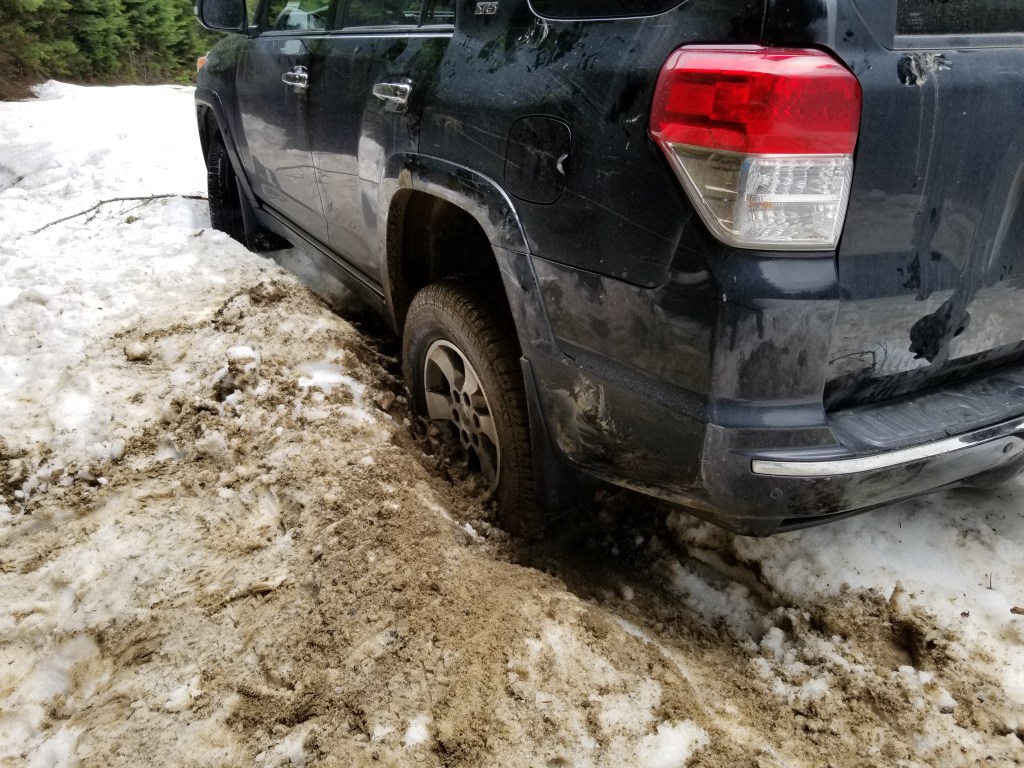
Shoulder season often requires snow driving judgment.
Even if a road is drivable:
- parking lots can have deeper snow
- turnarounds can be sketchy
I’ve personally gotten stuck more than once — and once even needed a tow truck. That’s a great way to kill your buzz and ruin a day.
If you’re unsure:
- be conservative
- turn around early
- live to hike another day
If you plan to drive on snowy roads:
- carry tire chains
- carry a snow shovel
- keep them in your car all winter
Some areas — like the Paradise area of Mount Rainier or Hurricane Ridge in Olympic National Park — may require chains for the entire winter season, typically December through March or longer. Always verify current requirements.
Why Shoulder Season Is Worth the Effort
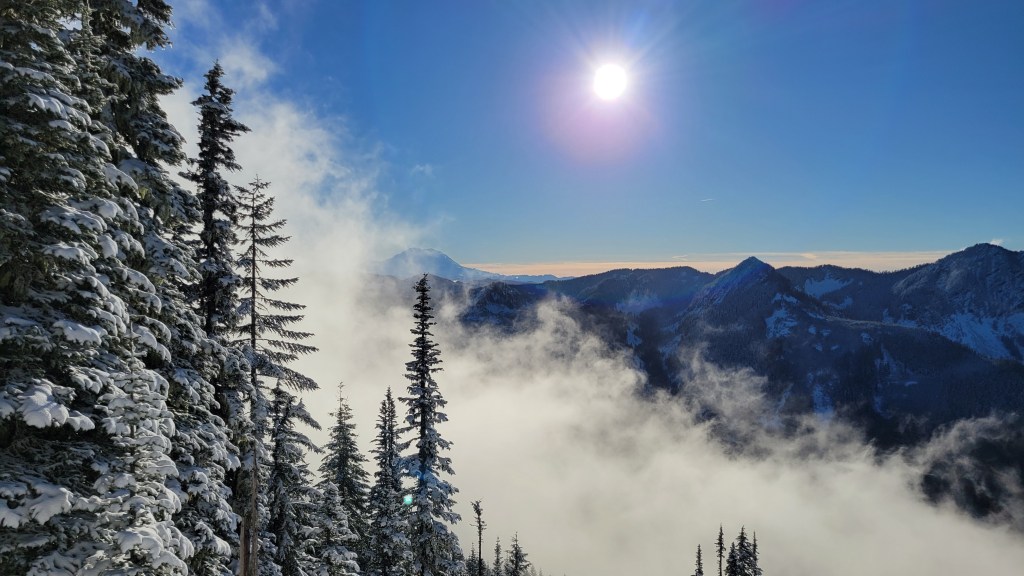
Shoulder season hiking rewards people who:
- plan intentionally
- watch conditions
- value timing over hype
If you can hit the window just right, you’ll experience:
- serene trails
- dramatic seasonal contrast
- and some of the most memorable hikes of the year
That’s the art of the shoulder season hike.
See my article on my best Washington hikes by season for more ideas.
 Dangenda