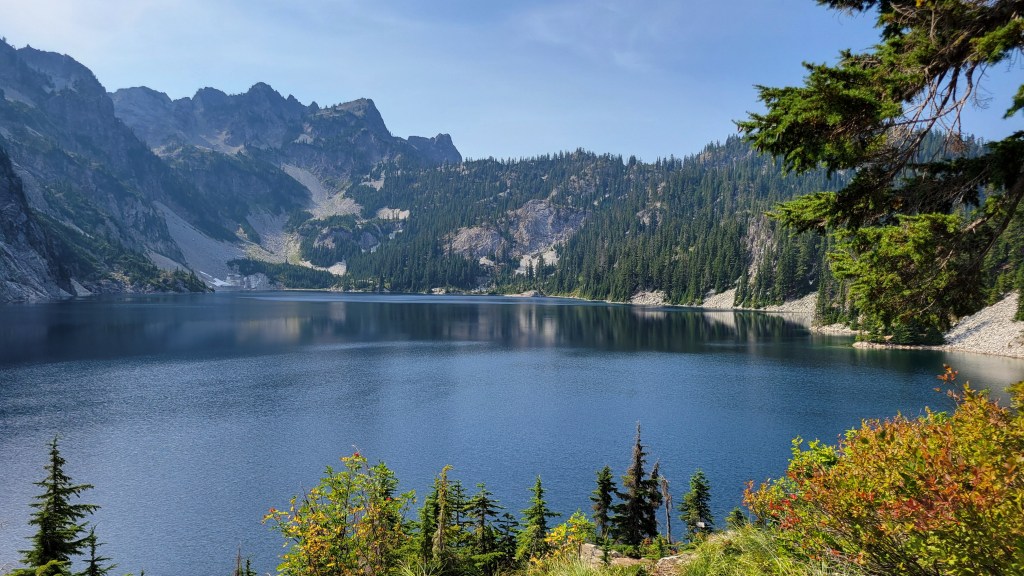
Snow Lake is one of the most popular hikes in Washington — and for good reason. It’s close to the city, the logistics are straightforward, the effort feels reasonable for most people, and the payoff is obvious once you reach the lake.
It’s also a hike people love to dismiss.
Snow Lake has a reputation for being basic — the avocado toast of Seattle hikes. Everyone knows about it. Everyone’s done it. And on a summer weekend, it can feel less like a trail and more like a superhighway of people.
Both things can be true. Snow Lake can be a great choice — and an underwhelming one — depending entirely on when and why you go.
This hike also appears in my broader decision guide:
Best Hikes in Washington by Season
https://dangenda.com/2026/01/05/best-hikes-in-washington-by-season/
The Default Experience: Snow Lake in Summer
Summer is the season most people associate with Snow Lake. Warm weather, clear views as you climb, long daylight, and the undeniable appeal of jumping into cold alpine water at the end.
That logic makes sense.
In summer, Snow Lake works best when you treat timing as the main variable, not fitness.
If you can go on a weekday, the hike is far more enjoyable. The trail breathes. The lake feels like a destination instead of a reward line. You can actually linger.
On weekends — especially mid-summer — the experience changes. Crowds don’t just affect solitude; they affect pacing, noise, and the overall feel of the place. For some people, that’s fine. For others, it completely undermines the point of being there.
This is one of those hikes where the difference between a great day and a frustrating one is often just Saturday vs Wednesday.
When summer Snow Lake is worth it
- You can go early or late
- You want a cold-water swim payoff
- You’re hiking with mixed experience levels
- You value accessibility and predictability
When it’s not
- Midday on a summer weekend
- When solitude is your primary goal
- When you want something that feels remote
Snow Lake in summer isn’t subtle — but it can still be satisfying if you choose your window carefully.
A Smarter Pivot: Snow Lake in Fall
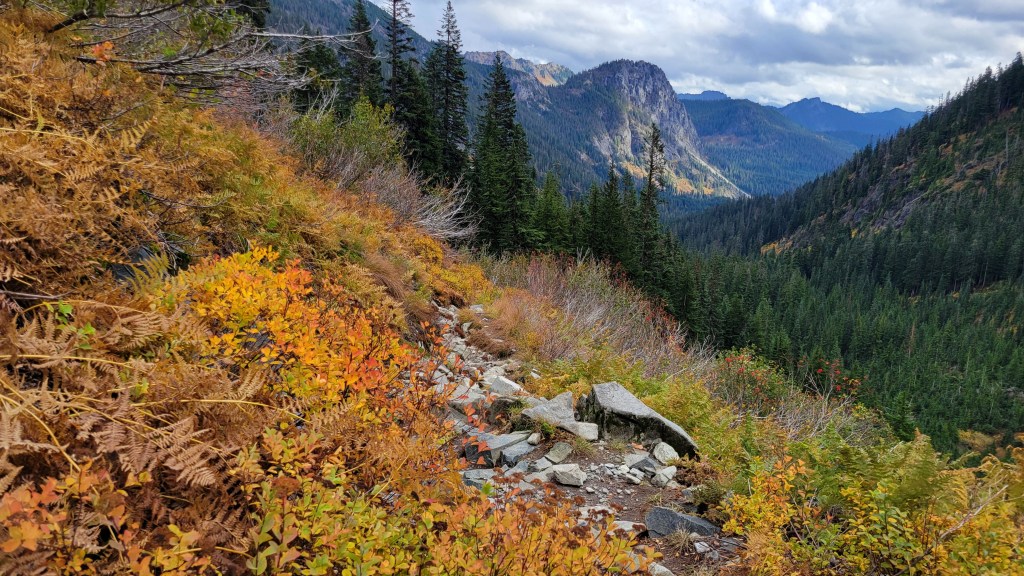
If summer crowds are the reason you hesitate, fall is where Snow Lake redeems itself.
This hike has some of the best fall color in the Snoqualmie area, especially in September and October before snow starts creeping down from higher elevations. Temperatures moderate, light quality improves, and the trail thins out noticeably as the season progresses.
Fall is also when I strongly recommend taking the short side trail to Source Lake.
Source Lake is my favorite part of the Snow Lake area in fall. It’s a brief traverse from the main trail, but it feels like a different world — quieter, calmer, and more reflective. Small waterfalls and streams cut through the landscape, and the views down into the valley are expansive without feeling exposed.
Later in the fall, it’s possible to experience real solitude here while still catching the tail end of fall color. It’s one of the few places on this hike where the pace naturally slows down.
If Snow Lake ever feels too busy or too on-the-nose for you, Source Lake in fall is often the antidote.
Spring Snow Lake: The Lost Season
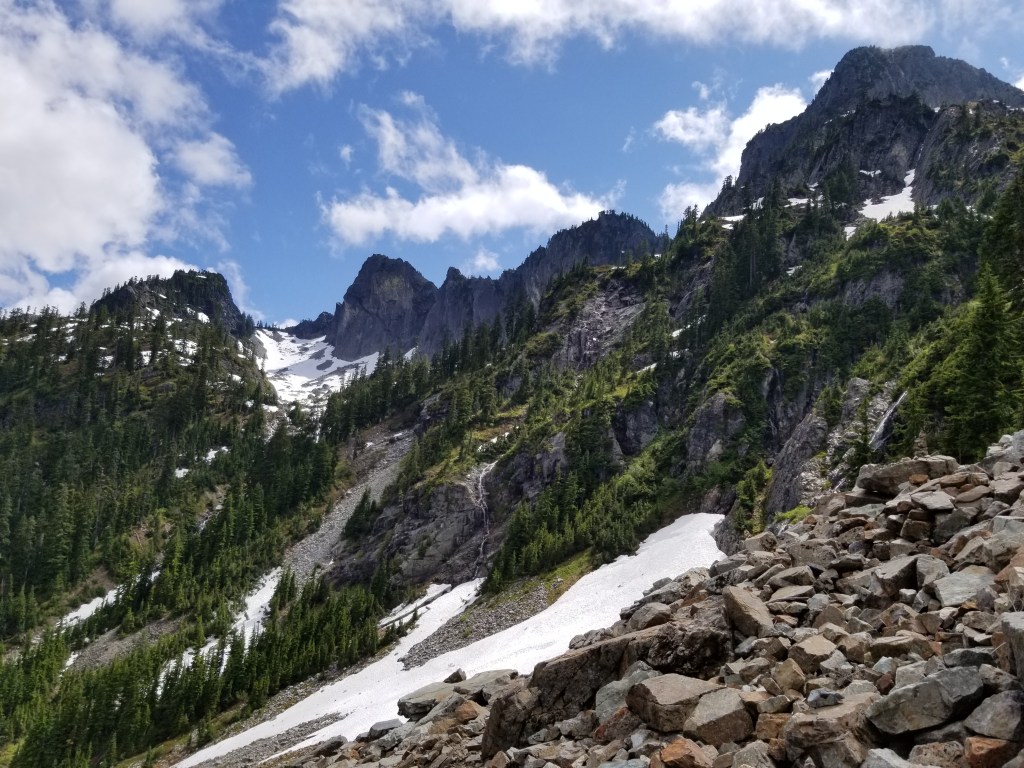
Spring is the forgotten season at Snow Lake — and for good reason.
There’s a reason it’s called Snow Lake – snow arrives in fall and tends to linger on the upper portion of the trail well into May, June, and sometimes early July. As the snow starts to melt, the trail becomes technically hikeable again, but conditions are rarely ideal.
Melting snow usually means:
- hiking through puddles and shallow creeks
- muddy, uneven footing
- patches of snow that are neither stable nor scenic
By the time you reach the top, the snow isn’t the fresh, quiet winter kind. It’s the brown, end-of-season snow that absorbs heat and drains energy. Visually and experientially, this is often the least rewarding version of Snow Lake.
That’s why spring is probably the least popular and least beautiful time to do this hike.
The late-spring exception
In late May or early June, if:
- the snowpack has mostly receded
- trail reports suggest decent conditions
- you catch a sunny day
…you can sometimes hike Snow Lake with just a hint of snow remaining near the top.
That small amount of snow is often enough to scare most people away — which means you can beat the summer crowds while still enjoying cooler temperatures and long daylight.
This window is short and fickle, but when it lines up, it can be surprisingly pleasant.
Winter Snow Lake: Timing Is Everything

Winter is the least traveled season at Snow Lake — and potentially the most rewarding, if you get the timing right.
The ideal winter window is after snow has arrived, but before the lake freezes over or turns into a featureless snow basin. In that window, you get winter scenery, quiet ascents, and a serene version of the lake without turning the hike into a major snow-travel project. This window is usually mid-November to early December (which if you’re going by the technical definition, is actually still fall, but winter starts early in the mountains ~the first snow showers usually hit in late October at higher elevations).
Once deeper winter sets in — typically late December or January — the usual Snow Lake route (often called the “summer route”) becomes effectively unhikeable. Snow piles up, trail breaking becomes exhausting, and risk increases quickly unless you’re experienced and well equipped.
I do not recommend attempting Snow Lake once it’s deeply snowed over.
Earlier in winter, because this is a well-trafficked trail, the route is often packed down enough that hiking boots with traction devices are sufficient. Snowshoes can be useful, but they’re sometimes overkill during that early phase.
As winter progresses, a smarter alternative is the winter route to Source Lake, which approaches from a different direction and is better suited for snow travel.
When conditions align, winter Snow Lake offers solitude and a quiet, almost meditative atmosphere — but only if you respect the seasonal limits.
Optional Extension: Continuing Past Snow Lake Toward Gem Lake
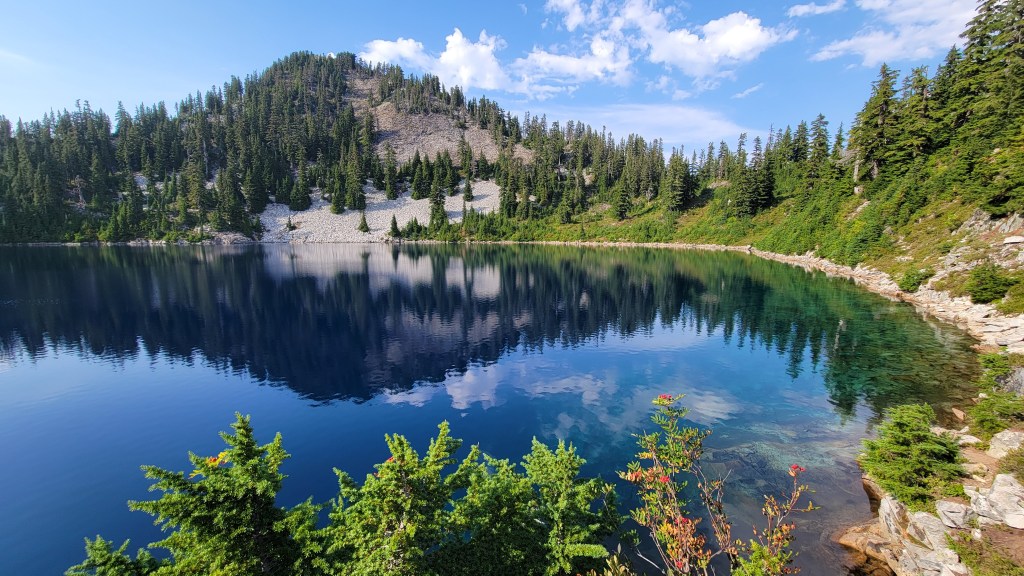
For hikers with extra time and energy, Snow Lake doesn’t have to be the end of the day. The trail continues around the lake and climbs toward Gem Lake, and foot traffic drops off noticeably once you move past the main shoreline.
That said, Gem Lake itself is not as compelling as Snow Lake.
The trail beyond Snow Lake becomes more rugged, the elevation gain increases significantly, and the payoff doesn’t scale at the same rate. For most people, the additional effort isn’t matched by better scenery.
Unless you’re specifically looking to extend mileage or add vertical, I generally do not recommend pushing all the way to Gem Lake.
A better option for most hikers is to simply continue walking the trail along Snow Lake itself. Circumnavigating part of the lake is mostly flat, quieter than the main arrival area, and offers changing perspectives of Snow Lake without committing to the steeper climb beyond it.
That shoreline walk often makes for a perfect turnaround point:
- minimal extra effort
- fewer people
- better views
- no added logistical cost
If you’re feeling strong and want to turn a popular hike into a longer day, Gem Lake can be an option. But if your goal is scenery and experience quality, Snow Lake itself remains the better destination.
Parking & Logistics (What People Underestimate)
Parking is straightforward most of the year, but winter changes the equation.
The Snow Lake trailhead sits at Alpental, part of the Snoqualmie Summit ski area. During ski season — especially on weekends — parking often requires a paid day pass. Rules can change by season and conditions, with possible exceptions for carpools, early arrivals, or weekdays.
If you’re going in winter, check the ski area’s website, not just trail apps.
Outside of winter, parking reverts to standard trailhead rules and may require a Discover Pass or Northwest Forest Pass. Trail reports are usually the best real-time signal.
Who Snow Lake Is (and Isn’t) For
Snow Lake is a great choice if:
- you want a reliable, well-maintained trail
- you value payoff over novelty
- you’re hiking with varied experience levels
- timing flexibility is on your side
It’s probably not the right choice if:
- solitude is non-negotiable
- you’re allergic to popularity
- you’re looking for something subtle or remote
- it’s a summer weekend and you have better options
Snow Lake isn’t overrated — it’s just over-simplified. The experience quality depends far more on timing and intent than most people expect.
Final Judgment
Snow Lake earns its popularity, but it doesn’t reward autopilot decisions.
In summer, treat it as a timing exercise.
In fall, it becomes far more interesting — especially with a Source Lake detour.
In spring, it’s mostly about crowd avoidance rather than beauty.
In winter, it’s conditional and unforgiving once snow deepens.
If you choose the day well, Snow Lake delivers.
If you don’t, it reminds you why judgment matters more than reputation.
Author: Dan
Experience: Multiple seasons, multiple years
Default lens: Summer
Last reviewed: January 2026
 Dangenda